Realworld
LAB Digital Voice of the Customer: The Key to Elevating Your Business
Discover how the voice of your customers in the digital world can transform your business with Oleksandra Melnyk, Head of Voice of Customer at Pronovias Group.
In the Runroom LAB Digital Voice of the Customer: The Key to Elevating Your Business, we explore the key tools and strategies to capture the voice of your customers in digital channels and, more importantly, how to turn that valuable feedback into concrete actions that drive your success.
Here are the conclusions and learnings 👇
What is really the Voice of the Customer (VoC) and why does it matter today?
The Voice of the Customer (VoC) is the set of opinions, perceptions, emotions, and expectations that customers have about a brand throughout their relationship with it. It is collected through multiple sources: surveys, social media, reviews, digital behavior, or customer service interactions.
In today's digital context, where users constantly interact with brands across multiple channels, VoC is no longer an “extra” but becomes a strategic pillar of the business.
Why? Because it allows you to:
- Detect frictions in real-time
- Understand changing expectations
- Quickly adapt products and services
- Make decisions based on real data, not assumptions
In a hyper-competitive environment, not listening to the customer means losing opportunities for improvement, innovation, and growth.
The paradigm shift: from collecting feedback to activating it
One of the key messages from the Runroom LAB is that it's not enough to collect feedback.
The true value of VoC lies in turning that knowledge into action.
This involves going through three levels of maturity:
Level 1: Listening
- Satisfaction surveys
- Reviews
- Social listening
Level 2: Analysis
- Pattern identification
- Customer segmentation
- Detection of friction points
Level 3: Activation (the differentiator)
- Changes in product or service
- Personalization of experiences
- Automation of decisions
The most advanced organizations not only listen: they integrate VoC into their daily operations.
The importance of combining solicited and unsolicited feedback
A common mistake is relying solely on surveys.
The article highlights the need to combine:
- Solicited feedback: surveys, NPS, forms
- Unsolicited feedback: navigation, abandonment, spontaneous comments
This combination offers a more complete view of the customer.
👉 Example:
- Survey: “all good”
- Real behavior: abandons at checkout
The real insight is in the behavior, not just in what is declared.
Beyond superficial indicators
Another key learning: don't stick to simplistic metrics (like green/red faces or isolated NPS).
The value lies in answering questions like:
- Who doesn't buy and why?
- Where does the journey break?
- What micro-frictions affect conversion?
Effective VoC is deep, contextual, and actionable.
Personalization as a natural result of VoC
One of the great outputs of a good VoC strategy is personalization.
Thanks to customer knowledge, companies can:
- Adapt content according to behavior
- Personalize digital journeys
- Offer relevant recommendations
- Adjust communication in real-time
This is no longer optional:
users expect experiences tailored to them.
The LAB highlights that this trend will continue to grow with:
- Navigation data
- Social media activity
- Applied artificial intelligence
Case study: Pronovias and VoC maturity
The case of Pronovias illustrates how a company can evolve in VoC:
- Multiple active listening channels
- Integration between online and offline
- Concrete actions derived from feedback
- Focus on personalizing the experience
Additionally, the company draws inspiration from other sectors (travel, hospitality) to improve its CX.
👉 Key insight:
VoC is not an isolated project, but a cross-functional capability of the organization.
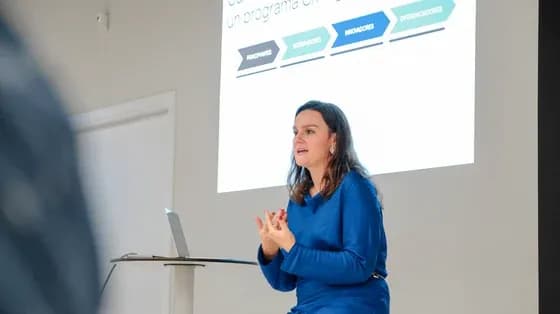
Where the Voice of the Customer is heading
Trends that will shape the future of VoC:
1. Advanced personalization
Increasingly tailored experiences to individual behavior
2. Intelligent content prioritization
Optimization based on real usage data
3. Digital advisory
Digitized human interactions (e.g., online consultants)
4. Automation with AI
- Massive feedback analysis
- Pattern detection
- Automated responses
How to implement a VoC strategy in your business
Step 1: Identify key touchpoints
Where the experience occurs (web, app, store, support)
Step 2: Define listening system
What channels and tools to use
Step 3: Centralize data
Unify all information into a single view
Step 4: Analyze insights
Detect patterns, problems, and opportunities
Step 5: Activate changes
Turn insights into concrete actions
Step 6: Close the loop
Respond to the customer and measure impact
This approach allows building a real customer-centric culture, not just declarative.
9. Real business benefits
A solid VoC strategy directly impacts:
- Increase in satisfaction
- Improvement in conversion
- Greater loyalty
- Product innovation
- Sustainable competitive advantage
In essence, it turns the customer experience into a growth lever.
Conclusion
The digital Voice of the Customer is not just listening:
it's understanding, interpreting, and acting.
The companies that will lead the future will be those capable of:
- Integrating VoC throughout the organization
- Making decisions based on real data
- Continuously adapting to the customer
Because in a digital environment, the customer experience is the business.
A Runroom LAB with
Bea Cardona
Business Consultant & Business Development at Runroom, multimedia engineer by training, is an expert in business and disruptive digital technologies, such as artificial intelligence, cloud computing, or marketing automation. She leads Customer Experience and Voice of the Customer projects for clients like SegurCaixa Adeslas, Viajes el Corte Inglés, or Telefónica. Bea on Linkedin
Oleksandra Melnyk
Head of Voice of Customer at Pronovias Group. She helps companies transform their customer experience management models. As part of this approach, she studies and analyzes the company's strategy and culture, and customer interactions to achieve better People-centered relationships. Oleksandra on Linkedin
Let's talk
Tell us about your challenge, and we'll explore how to turn it into a growth opportunity together.