Realworld
CX Open Space 2026: from journey to real impact with AI
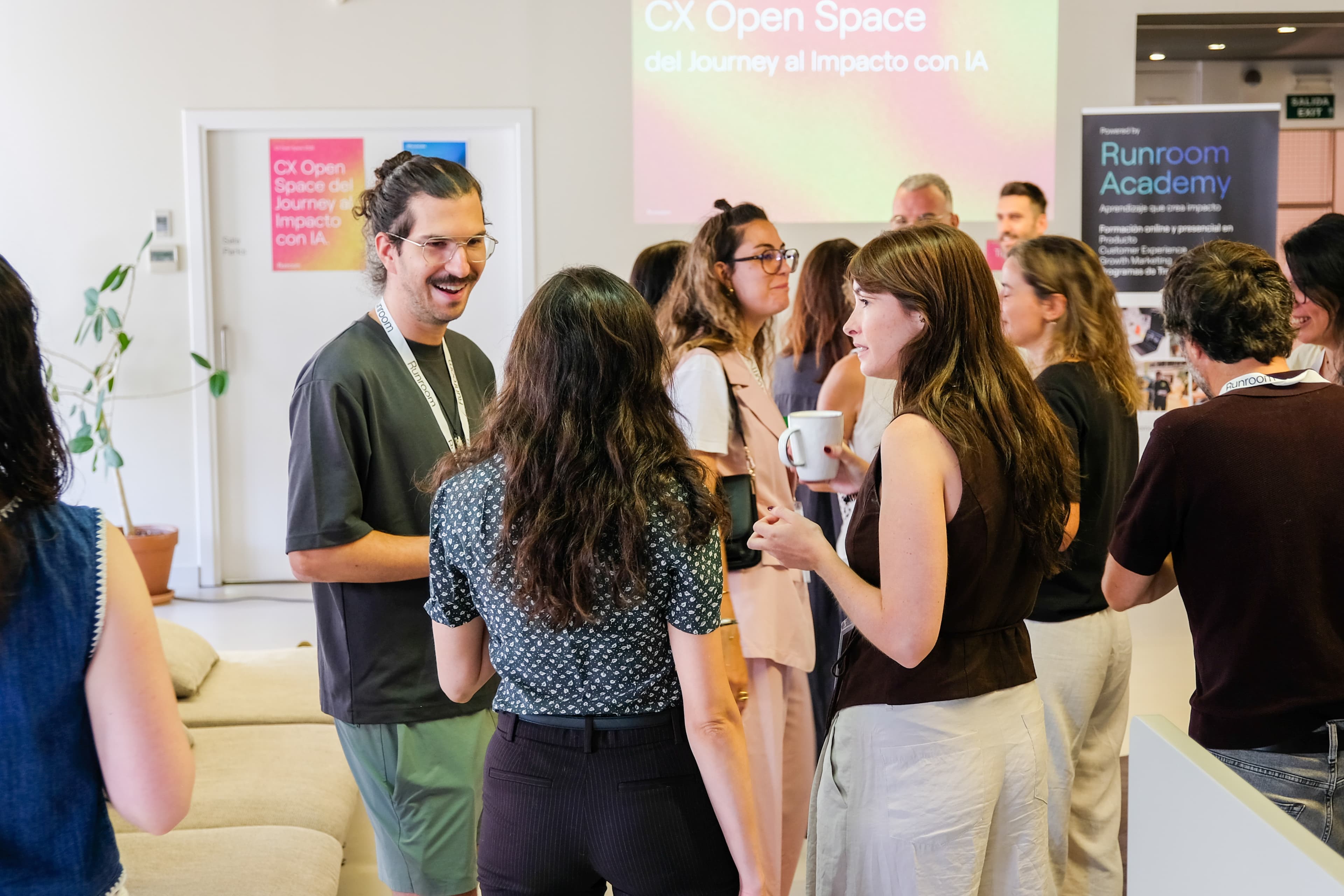
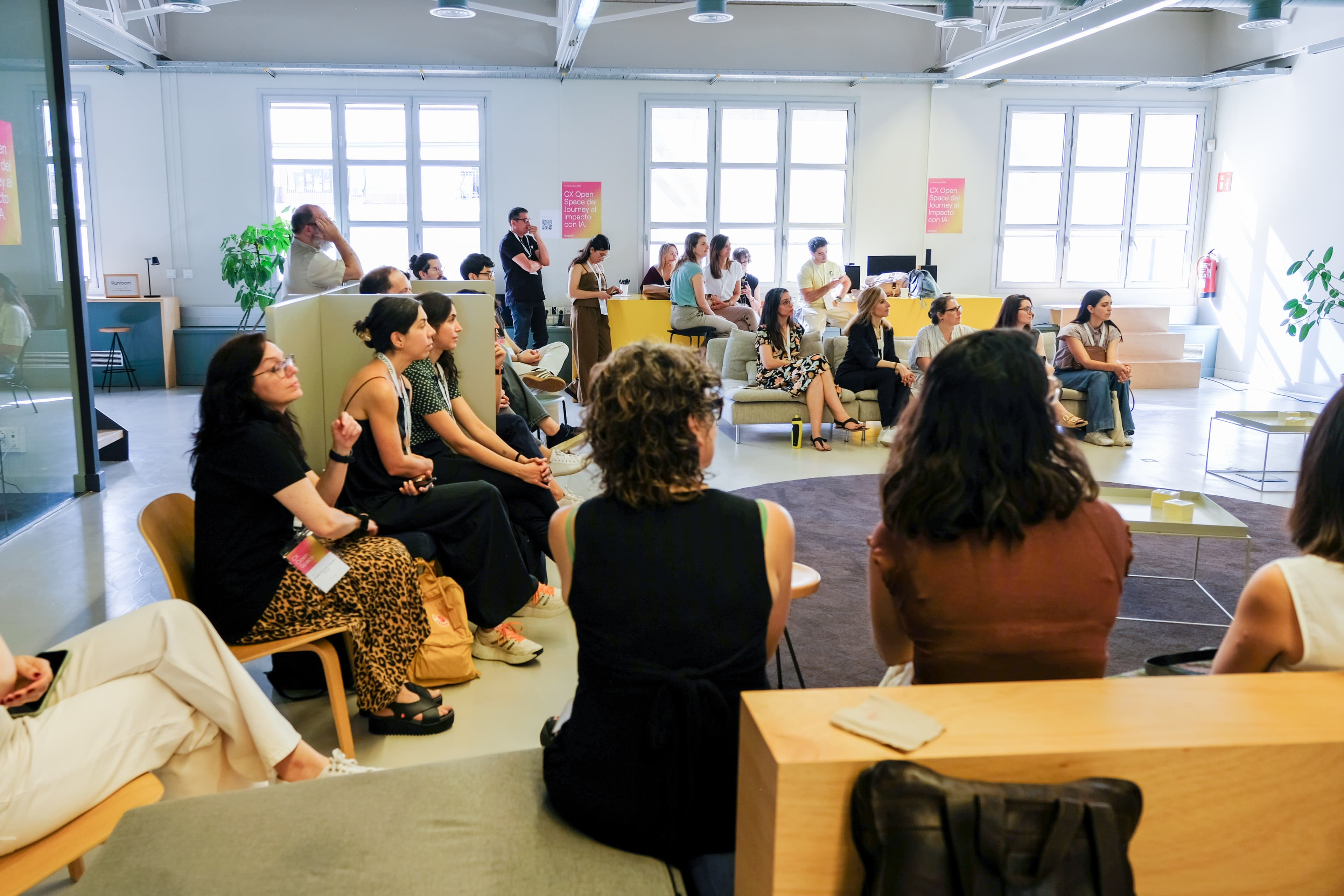
On June 18th, at Runroom, we brought together more than 50 professionals from CX, product, design, research, data, and business in a new edition of the CX Open Space: From Journey to Impact with AI.
It wasn't just another event. It was a space to ask the uncomfortable questions: the ones many have in mind but are rarely voiced aloud in a room.
And if I had to sum it up in one idea: the sector is stopping being afraid and starting to have criteria.
From uncertainty to maturity
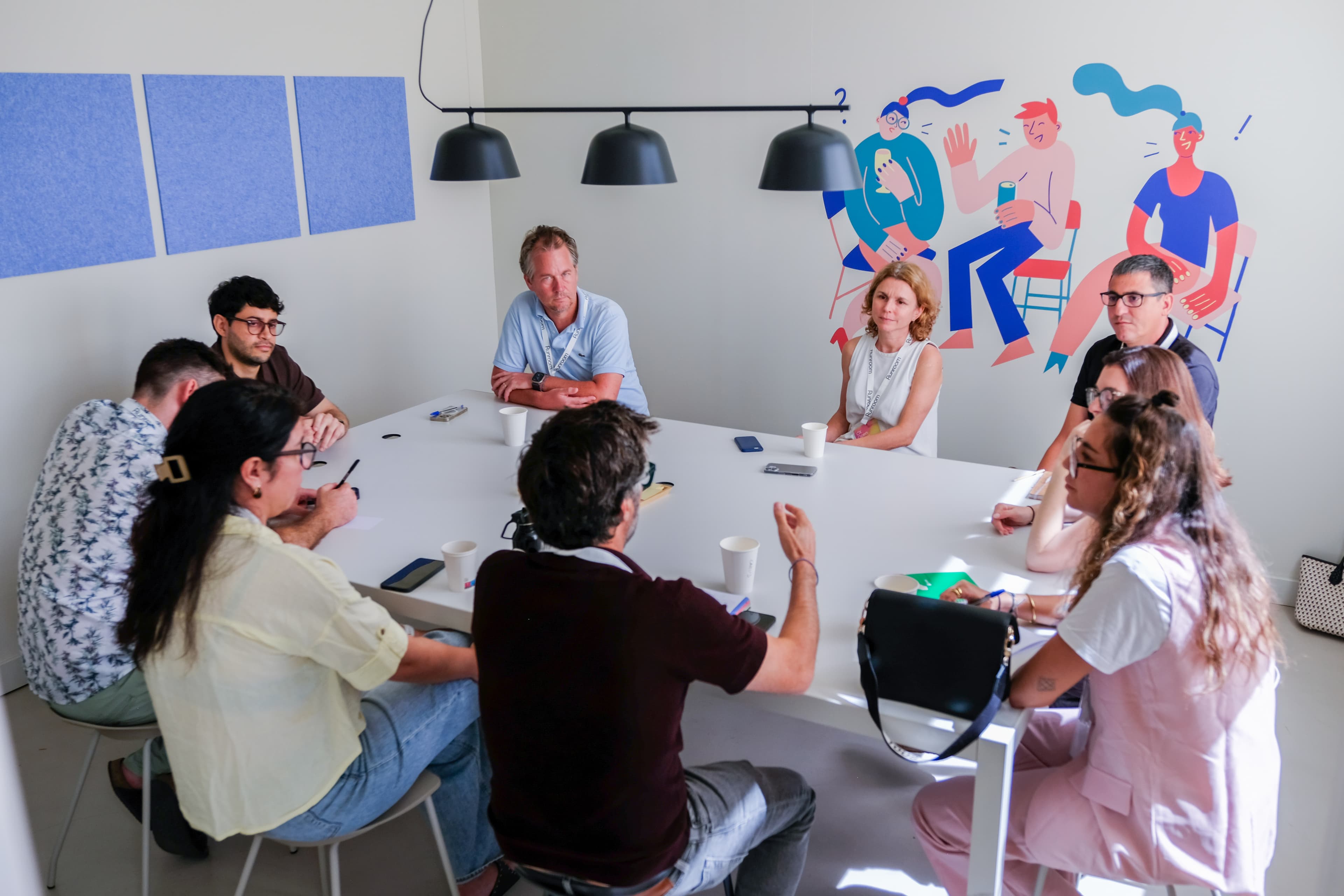
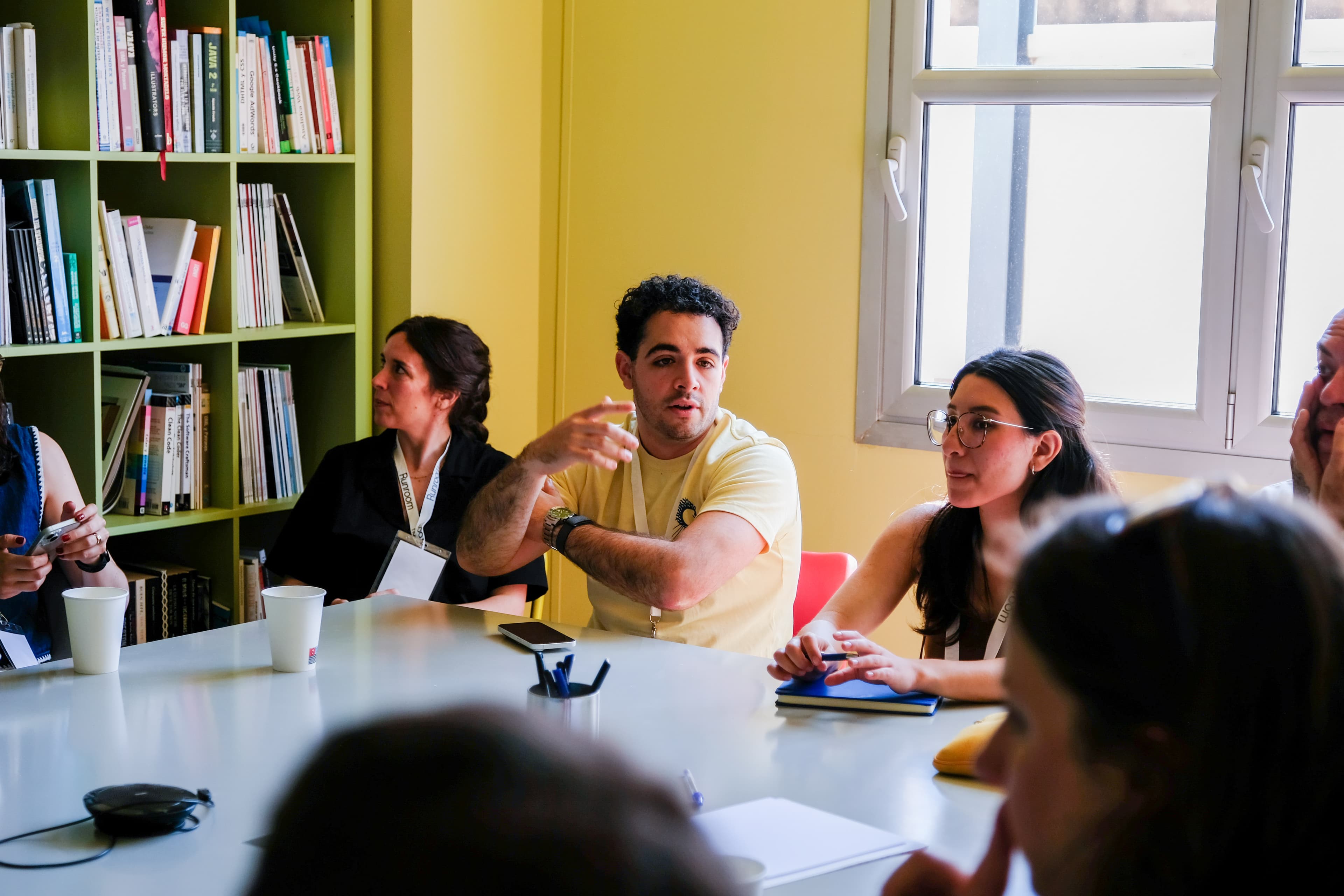
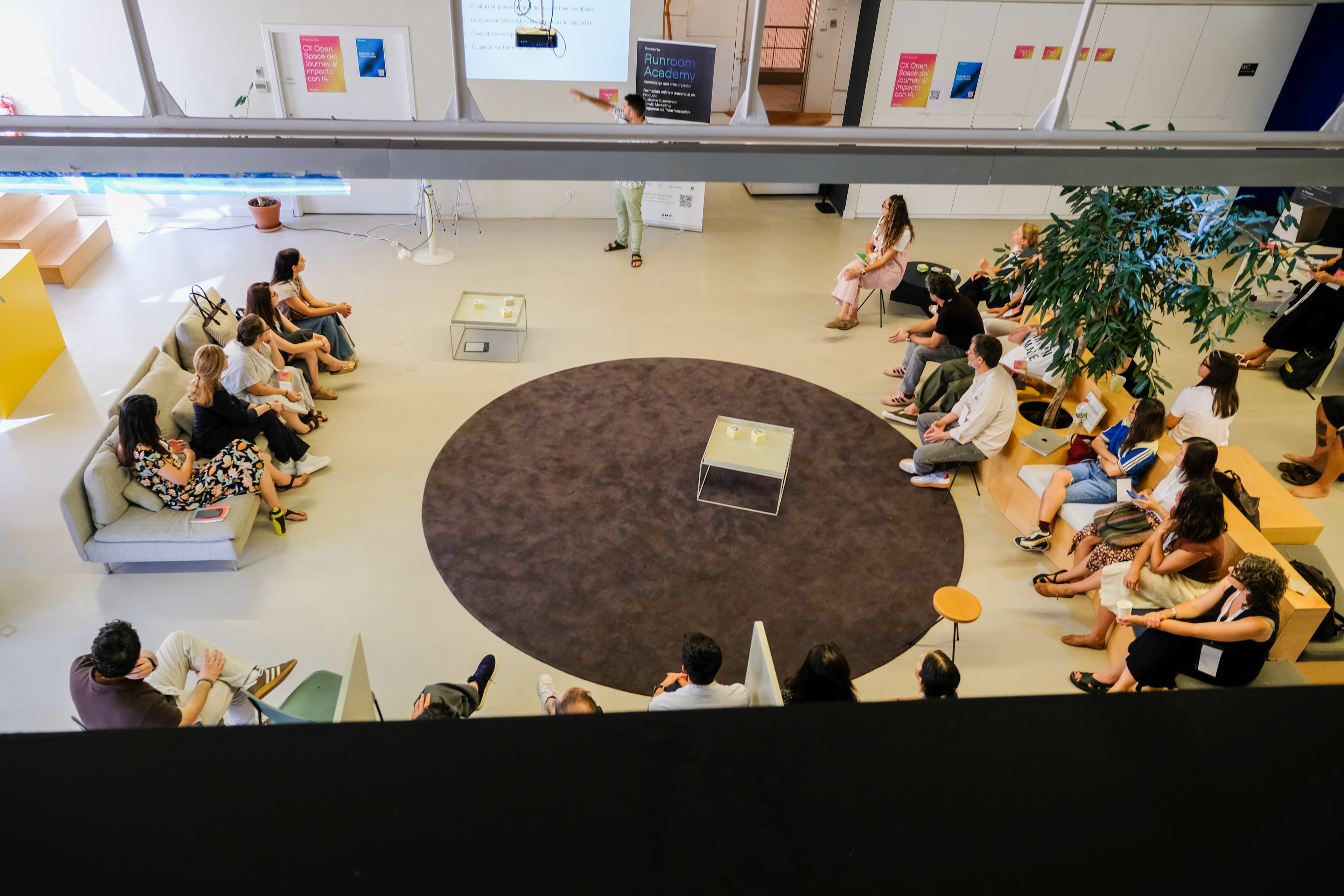
One of the things I like most about the Open Space format is that no one knows exactly what will happen when they walk through the door. The agenda doesn't exist until the room builds it. About 20 people out of the more than 50 attendees came forward to propose topics, and we filled 4 parallel tracks throughout the morning.
Choosing which ones to attend and which ones to miss was, for many, the hardest part of the day.
What was perceived from the start was something shared: a turning point compared to previous editions. The fear of losing jobs has given way to conversations about reskilling and how to find a new place in an environment that is still in full swing.
Our colleague Neus Amat noticed it clearly: "It's very noticeable that we are at a quite different point regarding AI adaptation compared to the first Open Space. Before, there was much more panic, lack of control, and a certain lack of direction. I think now we are at a point of greater maturity regarding that transition."
But with an important self-criticism: this maturity belongs to a privileged environment. In the daily reality of many organizations, there is what we could call a true adoption crisis. Many workers feel AI as an invader pushing them out of their comfort zone. The mandate to "use AI" comes without context, training, or support. And that doesn't generate enthusiasm, it generates frustration.
The conclusion is clear: technological implementation without change management is not transformation. It's noise.
As Marta Domingo Alegre, founder of Insights to WoW, wrote: "We still have a lot to discover... and also a lot to rethink. But if there's one thing I would really highlight, it's the attitude of the people who were there: professionals eager to share, learn from each other, and move forward together. That generosity is not always easy to find."
And Oliver Henares, Strategy & Futures Design Director at futuros.io, summed it up with a phrase that stuck: "There is no more technological and human meeting at the same time."

Does it make sense to talk about journeys in the AI era?
It was one of the most provocative questions of the day, proposed by Beatriz Cardona, consultant in Digital Transformation and Innovation.
The short answer: it depends on what you use them for.
The long answer lasted almost an hour. The journey as a tool for internal alignment remains valid. The journey as a static snapshot of customer behavior, much less so: AI allows updating that image in real-time, with continuous data, without waiting for the next mapping workshop.
What we question is not the tool itself, but how we use it. A journey that hangs on the wall and doesn't inform any decision is a cost, not an asset. And the underlying question is more demanding: are we using journeys to truly understand people, or to fulfill a process?
Beatriz acknowledged that she left with more questions than answers, and that was precisely the sign that it had been worthwhile.
The data paradox: customers think we know everything
There was a reflection that emerged almost in passing in one of the day's conversations, but it kept resonating.
As consumers, we have the feeling that companies know everything about us. That we are hyper-controlled. That apps record every click, every search, every second of attention.
The internal reality of most organizations is exactly the opposite: except for some very specific cases where they have them perfectly centralized, controlled, and exploited, the reality for the rest of the companies is that data remains highly dispersed. There is little consistency, it is very difficult to cross information between different systems, and access is complicated for different departments.
The problem has a name: departmental silos. Sales manage their area. Marketing manages theirs. Customer service, theirs. And no one aggregates a unique vision of the end consumer.
To truly improve CX, it's not enough to have data. We need to break those silos and build unified dashboards that allow the entire organization to understand and live the customer journey in an integrated way. Only then does AI have something to work on.
The gap between what the customer assumes we know and what we are actually able to use is one of the most silent frictions in CX. And solving the root problem remains a prerequisite for any conversation about AI.
The barrier is not technological, it's cultural
We know it: technology advances at a pace that is no longer the bottleneck. The real barriers to implementing AI in organizations are different.
The first is cultural inertia. In more traditional sectors, technology has historically been perceived as a cost center, not as a value generator. That prejudice is hard to dismantle, and AI inherits it.
The second is the fear of legal responsibility. Departments resist automating processes not due to technological ignorance, but out of fear of assuming the consequences of an error. Who is responsible if an automated system mismanages a patient's data? Who signs off on the decisions made by an agent? This question still doesn't have a clear answer, and that ambiguity hinders adoption more than any technical limitation.
The third, perhaps the most structural, is the performance evaluation model. The classic logic of measuring a professional's value by the hours spent on a task collapses when AI allows doing in one hour what used to take two weeks. We need to move from measuring time to measuring impact. And that change is not just about metrics: it's about mindset.

Designing the future, not just optimizing the present
The session "Traveling into the future with AI", co-facilitated by Oliver Henares and Sandra Cerqueira, Product Owner Web E-commerce, posed a key distinction that resonated in many conversations of the day.
Most current uses of AI in CX are aimed at optimizing what already exists: automating processes, speeding up analysis, reducing friction in known flows. It's a legitimate use. But there is one much less explored, and probably more valuable: using AI to imagine and anticipate what's coming.
Designing future scenarios. Simulating behaviors in contexts that do not yet exist. Building buyer personas not of today's customer, but of the customer three years from now.
As Sandra Cerqueira pointed out: "I'm leaving with a more open mind and a new perspective on where this whole universe of AI applied to customer experience is going."
The challenge is to move from using AI as a mirror of the past to using it as a telescope of the future.
Voice agents and the new face of CX
Marcos Valera, from ElevenLabs, brought to the Open Space one of the most immediate and concrete disruptions for the sector: AI-powered voice agents.
We are not talking about the frustrating voice bots of five years ago. Automated phone support is today the highest volume use case in this area, and the ability to clone voices and adapt accents is generating a level of hyper-personalization that directly impacts engagement and conversion.
The implications for CX are profound: what happens to service flows when a voice agent can handle most cases with human-comparable quality? Where does the human need to be?
But the conversation went beyond efficiency. This technology also opens ethical debates that the sector cannot ignore. The possibility of creating voice companions to combat loneliness, or delegating empathy to a machine in moments of high emotional vulnerability, raises questions that go far beyond CX in the strict sense.
And here is a question I find relevant: Are we designing more human experiences, or are we replacing the human with something that simulates it very well?
AI ethics as positioning
Mireia Lopez, proposed one of the most necessary debates of the day: AI ethics in customer experiences.
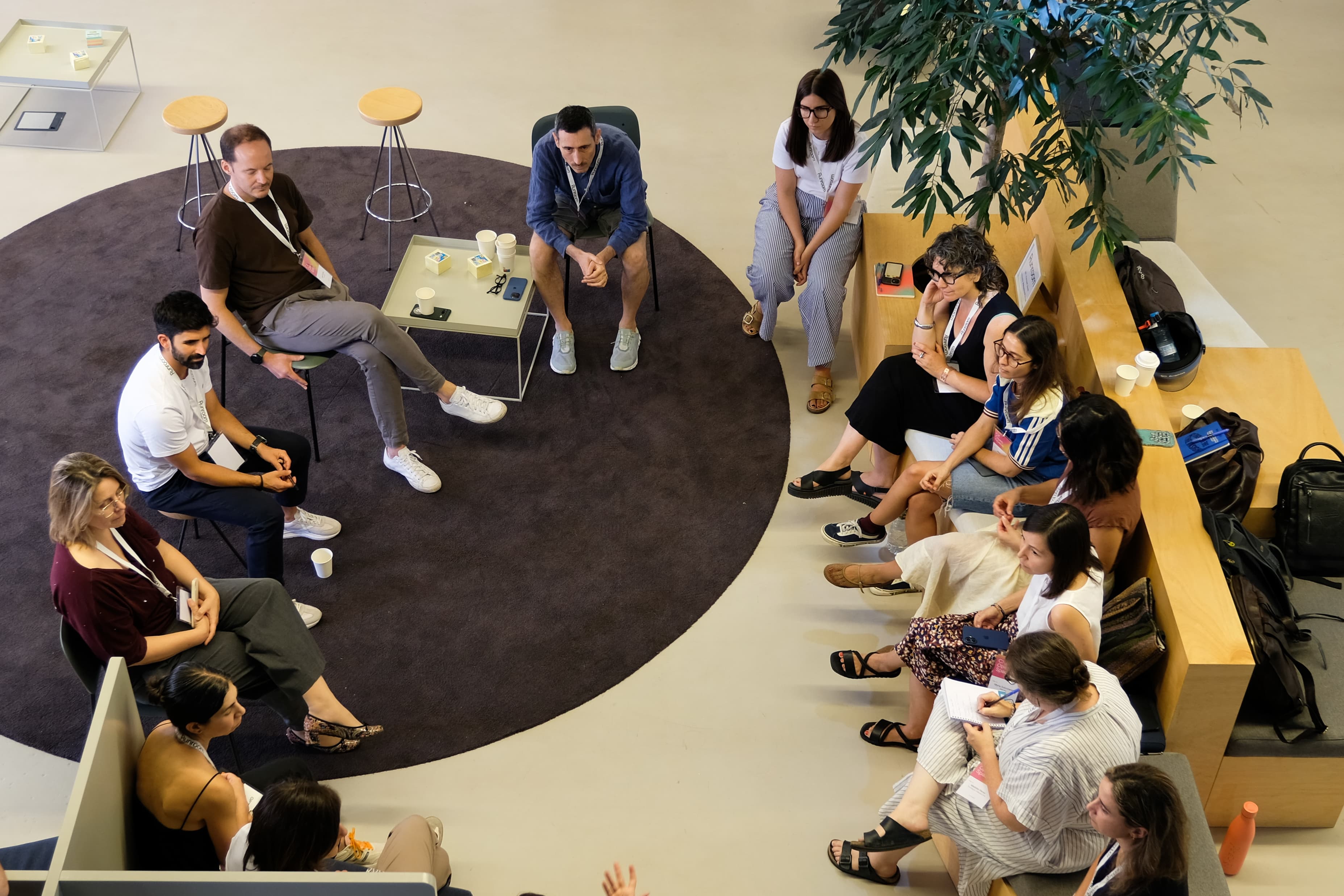
The most powerful conclusion was a change of framework: stop talking about ethics as compliance (what we cannot do) and start talking about ethics as positioning (what we choose to do and how we communicate it publicly).
"We bring morality to technology, not the other way around. Don't let the power of the tool make you question things that were already non-questionable."
Companies that take a public and clear stance on how they use AI will not only be complying with the law. They will be building trust. And in CX, trust is the hardest asset to build and the easiest to lose.
Doing better, not just doing more
AI allows for radical process optimization. Doing in an hour a report that used to take two weeks. But the danger is clear: generating superficial content, losing trust in the extracted insights, and filling the organization with automations that no one knows how to defend.
The big change in mindset is to stop using technology to do more and start using it to do better.
This has direct implications for training. It's not about combating AI (like trying to detect who used ChatGPT in a deliverable), but about changing the way we ask questions. Creating what was called "cognitive gyms" at the Open Space: spaces to train critical reasoning against machine responses, using Socratic methods that challenge professionals to go beyond the first output.
César Úbeda, CXO and co-founding partner at Runroom, named it with a concrete image: the risk of "automatically generated armchair opinions", insights that seem solid but no one has really validated or feels responsible for defending.
The answer is not to do less with AI. It's to learn to take ownership of the process: understand what you asked, why, how you evaluated the result, and what criteria you applied. The criteria remain human. The synthesis can be from the machine.
Synthetic users: three visions in tension
One of the most heated debates revolved around synthetic users: the possibility of using AI to simulate real user behavior, with direct implications for research.
Three clearly differentiated currents emerged:
1. Total substitution. AI can replicate behavior patterns with enough fidelity to reduce or eliminate the need to talk to real people. The argument: faster, cheaper, more scalable.
2. Hypothesis pre-validation. AI as a first filter: helps discard ideas before investing in research with people, but human contact remains essential to validate what really matters.
3. Enrichment of access. AI generates data that facilitates and improves access to real people, not replaces it. More context to better prepare for conversations.
None of the three prevailed. And that was deliberate: the Open Space does not seek consensus, it seeks for people to leave with richer perspectives than they had when they entered.
The fishbowl: boiling before order
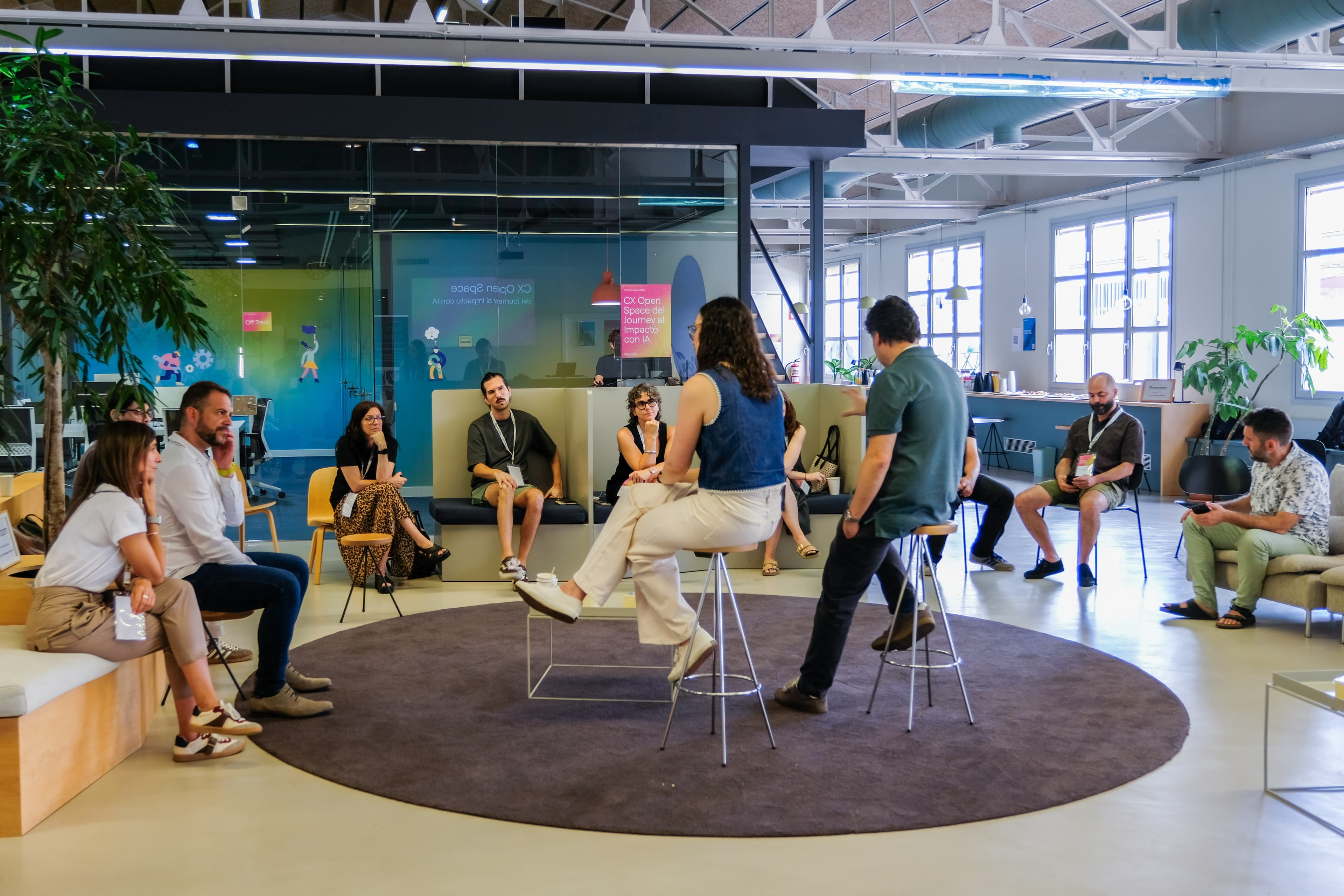
The Open Space closed with a fishbowl: an inner circle of conversation that the rest observe, with the possibility to enter and exit at any time.
The topic: the current state of AI and its adoption in society.
The general feeling was one of progressive ordering. Six months ago, the number of tokens consumed was a performance metric; now real impact is beginning to be measured. The debate has gained nuance and honesty.
But self-criticism was constant: the room was a bubble. And the professionals in that bubble have a responsibility, according to César Úbeda: "Those in this environment have the role of guiding towards an ethical and useful use."
Other ideas that remained open: AI democratizes quantitative data, but we must maintain the connection with the human "why." Quantitative and qualitative do not replace each other: they complement each other. And profiles oriented towards people and experience seem to navigate this change with more order than those more focused on digital-screen.
The most honest conclusion of all, and also the most useful: "Order will come, but we are still in the chaos before the rearrangement."
Conclusion: humanity at the center of design
Although AI is democratizing access to data analysis and synthesis, the core of CX remains profoundly human.
The goal should not be to implement technology by inertia, nor to use it just to produce more. The most important question is not what AI can do, but under what philosophy we use it. And how we maintain our human relevance and responsibility in the process.
Faced with automated reports and insights generated in seconds, the true differential value of CX professionals will be exactly that: using technology as a bridge to genuinely connect with people's emotions and whys.
No model does that.
And that's why, more than ever, we need spaces like this.
If you missed it, we look forward to seeing you at the next edition. Runroom organizes 3 Open Spaces a year:
Product Open Space
CX Open Space
Growth Open Space
Check the dates of upcoming events. We look forward to seeing you at Runroom!
Let's talk
Tell us about your challenge, and we'll explore how to turn it into a growth opportunity together.