Realworld
Lean and Continuous Improvement: How to Build More Efficient Organizations · LAB
Join our community.
We invite you to participate in the upcoming Runroom LAB and events we organize at Runroom. Check the upcoming dates.
In an increasingly changing business environment, continuous improvement is no longer an option but a strategic necessity. Organizations seeking to adapt, optimize their processes, and generate sustainable value are adopting Lean-based approaches to transform their way of working.
In this article, we explore how to apply continuous improvement from a Lean perspective, inspired by the insights shared by Jaume Jornet, Lean Coach at Adobe, during the Runroom LAB Lean and Continuous Improvement at Adobe.
What is continuous improvement and why is it key today?
Continuous improvement is a systematic approach that seeks to optimize processes, reduce inefficiencies, and maximize the value delivered to the customer through constant reviews.
Its main goal is to improve productivity, eliminate waste, and increase the company's competitiveness in the market.
However, it is not without challenges. In many organizations, the lack of alignment causes each team to have a different view of what to improve, making decision-making and prioritization difficult.
The real challenge: deciding what to improve (and how to do it)
One of the biggest problems with continuous improvement is not identifying opportunities, but prioritizing them correctly.
When a team tries to answer the question “what can we improve?”, multiple, often contradictory, answers arise. This reflects two key challenges:
- Lack of organizational alignment
- Uncertainty about the real impact of changes
Moreover, implementing changes in processes or structures does not guarantee positive results. Without a solid evidence base, decisions can move the organization away from its goals instead of bringing it closer.
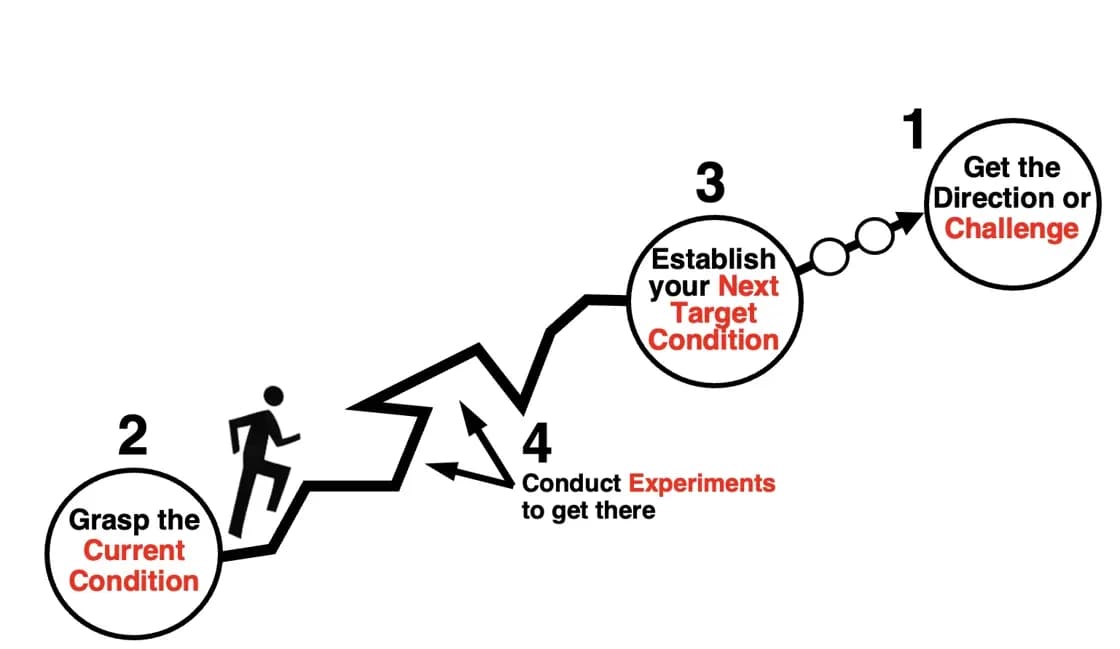
Lean: an evidence-based approach
This is where the Lean approach comes into play.
More than a methodology, Lean is a philosophy that seeks to eliminate everything that does not add value and optimize the use of available resources.
In organizations like Adobe, this approach translates into:
- Data-driven decision making
- Continuous experimentation
- Iterative learning
- Progressive improvement at all levels
The goal is not to implement big changes all at once, but to build a culture where each improvement is backed by evidence and results-oriented.
Building a culture of continuous improvement
One of the key learnings is that continuous improvement depends not only on processes but also on culture.
For it to work, it must be integrated throughout the organization:
- Teams aligned with common goals
- Spaces to experiment and learn
- Systems that allow measuring impact
- Leadership that fosters change
In this context, tools and platforms like Adobe solutions help optimize workflows, improve collaboration, and facilitate data-driven decision making.
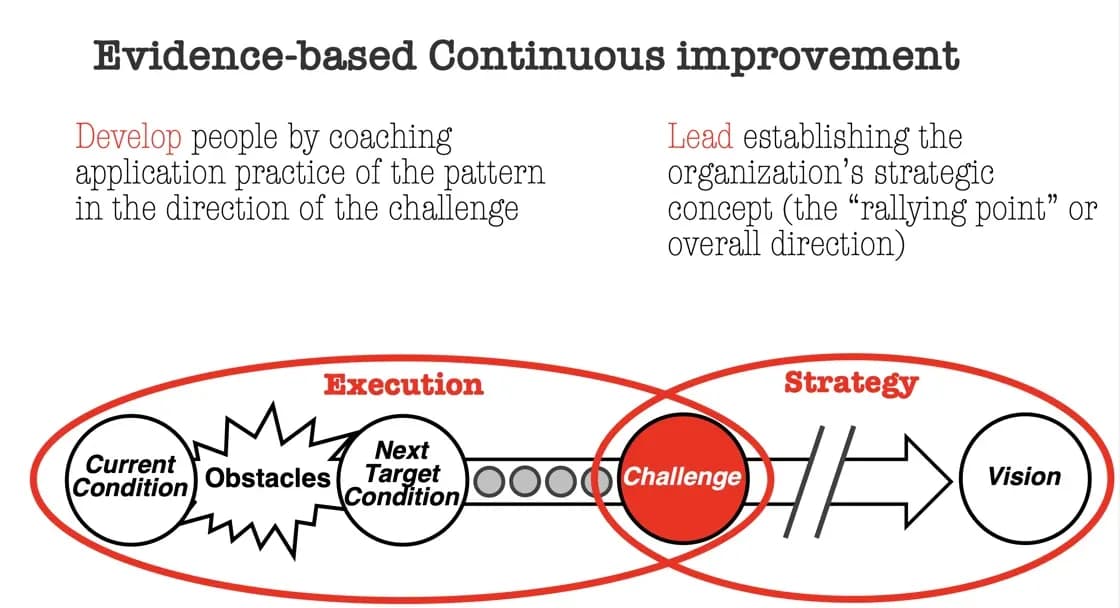
Lean principles applied to everyday life
Applying Lean in practice involves working on specific principles:
- Eliminate waste
Identify and reduce tasks, processes, or resources that do not add value. - Optimize flow
Ensure that processes are smooth, avoiding bottlenecks. - Make data-driven decisions
Replace intuition with real evidence. - Encourage continuous improvement
Understand that optimization is a constant process, not a one-time project. - Empower teams
People are the engine of change; their involvement is key to success.
Continuous improvement in Lean teams: challenges and solutions
Lean teams often face resource constraints, high workloads, and coordination difficulties.
To overcome these challenges, it is key to:
- Standardize processes
- Improve communication
- Commit to continuous training
- Create clear governance systems
This allows continuous improvement to scale and be sustained over time.
From theory to action: how to start
Implementing a Lean-based continuous improvement strategy requires a structured approach:
- Analyze the current state (diagnosis)
- Identify improvement opportunities
- Prioritize actions according to impact
- Experiment and measure results
- Iterate and scale
Success is not in making more changes, but in making the right changes.
Conclusion: continuous improvement as a competitive advantage
Companies that adopt Lean and continuous improvement not only optimize their processes but also develop a key capability: constantly adapting to change.
In an environment where uncertainty is the norm, this capability becomes a differential competitive advantage.
“The Toyota Way is not just about manufacturing efficiency, but also about developing people.” Jeff Liker
Links of interest
Jaume emphasized Toyota Kata and mentioned the Toyota way. Here are some useful resources if you are interested in delving into this model:
- Toyota Kata - https://amzn.eu/d/0wEqD4W
- The Toyota Way - https://amzn.eu/d/fFuVY9n
- Toyota Kata Practical Guide - https://amzn.eu/d/cmv09bh
- Lean Thinking - https://amzn.eu/d/1j21I9F
About Jaume Jornet
Jaume has worked for the last 15 years helping different companies, NGOs, and universities in their continuous improvement processes. He currently works as a Lean Coach for Adobe, Inc.
Jaume on Linkedin
Let's talk
Tell us about your challenge, and we'll explore how to turn it into a growth opportunity together.